


Skip Content
You are currently on the new version of our website. Access the old version .

Agronomy

Agronomy is an international, peer-reviewed, open access journal on agronomy and agroecology published semimonthly online by MDPI. 
The Spanish Society of Plant Biology (SEBP) is affiliated with Agronomy and their members receive discounts on the article processing charges.
Quartile Ranking JCR - Q1 (Agronomy | Plant Sciences)

All Articles (18,827)

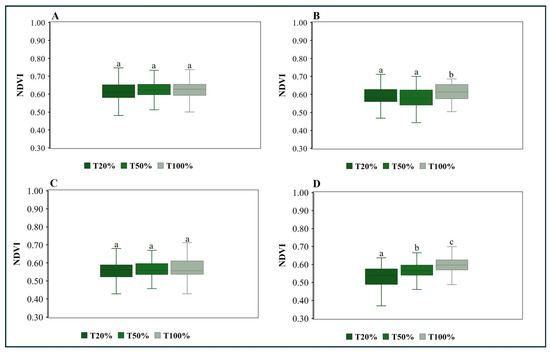
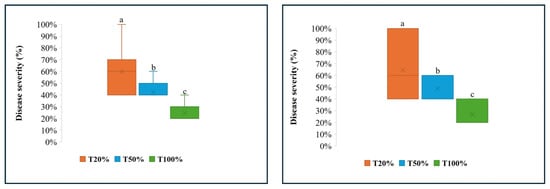
Tagetes patula is a widely cultivated ornamental plant and a natural source of bioactive compounds. This study evaluated the effects of cultivation–substrate systems on growth, flowering, lutein and zeaxanthin accumulation, substrate microbiological properties, and pest and disease occurrence in three T. patula cultivars (‘Csemő’, ‘Robusta kénsárga’, and ‘Orion’) grown under two greenhouse (peat-based substrate and hydroponics) and three field conditions (peat-based and two peat-free substrates). Greenhouse hydroponics markedly enhanced vegetative growth, resulting in the highest plant height, stem diameter, and shoot biomass, whereas peat-based greenhouse substrates produced the lowest vegetative performance. Flowering responses were more moderate and largely cultivar-dependent: peat-based field conditions supported the highest inflorescence numbers, cv. ‘Orion’ produced the greatest inflorescence biomass, and cv. ‘Robuszta kénsárga’ showed the strongest flowering intensity in peat-based systems. Cultivar ‘Csemő’ consistently accumulated the highest lutein and zeaxanthin concentrations among cultivars. Substrate moisture and microbial activity differed substantially among systems, with peat-free substrates frequently exhibiting elevated enzymatic activity. No fungal diseases were detected; thrips occurred only in greenhouse systems, and spider mites were restricted to cv. ‘Orion’ under hydroponic conditions. Overall, hydroponic and peat-free systems enhanced vegetative growth and microbial activity, whereas flowering and carotenoid accumulation were primarily cultivar-specific, as further supported by correlation analysis and PCA. These findings demonstrate that sustainable peat alternatives and hydroponic systems can effectively support high-quality T. patula production and carotenoid yield.

8 February 2026

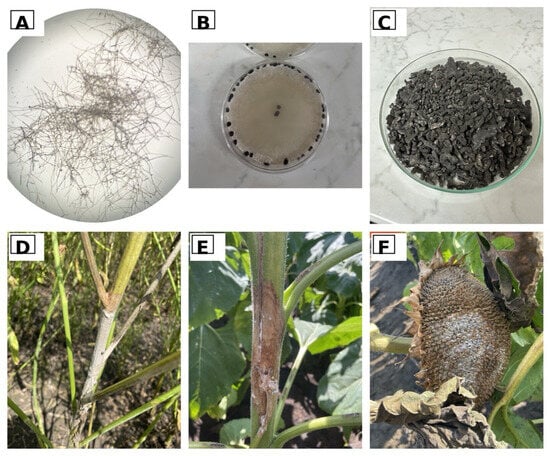
Overview of the experimental system, growing conditions and plant materials used for evaluating three Tagetes patula cultivars under different substrates. (A) Deep-water-culture (DWC) hydroponic system used during the early cultivation phase, with plants placed in smaller-volume units containing floating polystyrene boards and net pots. (B,C) Greenhouse-grown plants in the larger, 30 L hydroponic units at the third harvest (Tp2 yellow-flowered and Tp3 orange-flowered cultivars). (D) Greenhouse and (E) outdoor container-grown plants in peat-based and peat-free substrates at peak flowering. (F) Dense, fused root mass formed by five hydroponically grown Tp1 plants, illustrating the extensive root development characteristic of the DWC system. (G–I) Root systems of the Tp2 cultivar after harvest, grown in different field substrates: (G) peat, (H) peat-free 1 and (I) peat-free 2. (J–L) Freshly harvested inflorescences of the cultivars, showing differences in floral biomass and pigmentation. (K): Csemő’ (Tp1); (J):‘Robuszta kénsárga’ (Tp2); (L): ‘Orion’ (Tp3).

To explore the effects of Fe/P-loaded biochar on neutral Cd-contaminated paddy soils and the potential synergistic effects between biochar and modifying materials, a pot experiment was conducted using neutral paddy soil with a total Cd concentration of 1.10 mg/kg. Ball milling was employed for modified biochar production. Specifically, iron-loaded biochar (PBCFe) and phosphorus-loaded biochar (PBCP) were prepared using Fe2O3 and K3PO4, respectively. Results showed that PBCP significantly increased rice biomass while effectively inhibiting Cd uptake and accumulation in rice grains. Compared to the control (CK), P (K3PO4), and PBC treatments, the Cd content in rice grains under PBCP treatment decreased by 69.20%, 52.13%, and 56.06%, respectively. Moreover, compared with the treatments using single modifiers, PBCP and PBCFe effectively reduced Cd uptake and accumulation in rice tissues, especially in leaves and stems. In contrast, PBCP was more effective than PBCFe in enhancing iron plaque formation and Cd adsorption onto iron plaque. This promoted Fe uptake in rice roots, which might inhibit the upward translocation of Cd from roots to stems. Further analysis with FTIR and XPS results indicated that PBCP might be more compatible in immobilizing Cd in soil by inducing Cd-P co-deposition. Therefore, phosphorus-loaded biochar (PBCP) could be a more promising amendment for remediating Cd-contaminated alkaline rice paddy soils and improving rice quality.
8 February 2026

Effects of soil amendments on (a) Cd concentration in different parts of rice plants; (b) Cd concentrations in rice tissues; (c) total plant Cd uptake concentrations in rice tissues; and (d) bio-concentration factors (BCFs) of Cd in rice plant tissues. Different lowercase letters (a, b, c, etc.) indicate significant differences among treatments at the p < 0.05 level (one-way ANOVA followed by Tukey’s HSD test). The same applies below (Figure 2, Figure 3, Figure 4, Figure 5 and Figure 6).

Effect of NaCl Stress on Proline Metabolism in Two Varieties of Habanero Pepper

  • Camilo Escalante-Magaña,
  • Marta Lizama-Gasca and
  • Manuel Martinez-Estevez
  • + 3 authors

Although the role of proline (Pro) as an important osmolyte has been extensively studied, there are few comprehensive studies on their metabolism under salinity conditions. We investigated Pro metabolism in two habanero pepper varieties with contrasting salinity responses: Mayan Chan (tolerant) and Mayan Ba’alche (sensitive). First, a phylogenetic analysis of enzymes participating in their biosynthesis, P5CS and P5CR, and in its degradation, PDH, was performed. Additionally, the levels of their transcripts, the enzymatic activity, and Pro content were determined in plants subjected to 150 mM NaCl by short (0, 24, 48 and 72 h) and long (seven days) periods. Potassium flux in roots exposed to NaCl, in the absence or presence of Pro, was also measured. Phylogenetic analysis showed that the sequences were grouped according to their taxonomic family and not by salt tolerance of the species. Molecular and biochemical analyses showed significant differences between organs and varieties; the tolerant variety showed highest levels of transcripts, biosynthesis enzymes activities and accumulation of Pro. The results suggested that Pro metabolism in habanero pepper is a complex process, that is regulated at different levels and differentially between organs and varieties. Exogenous Pro only reduced potassium efflux in the sensitive variety exposed to NaCl, suggesting that a precise threshold of this amino acid is required to perform this function.

8 February 2026

Neighbor-Joining phylogenetic tree of P5CS proteins. In addition to the CcP5CS protein, those of green algae, mosses and other higher plants were included in the analysis, with 59 sequences taken into account. Sequences from chlorophyte species are high-lighted in green. The bryophyte Physcomitrella patens is shown in red. The lycophyte Selaginella moellendorffii is highlighted in orange. The ancestral angiosperm Amborella trichopoda is highlighted in gray. Monocotyledonous species are indicated in yellow, and eudicotyledonous species in blue. Halophytic plant species are indicated in red font within the phylogenetic tree. The accession numbers and the meaning of the nomenclature are presented in Supplementary Table S1. The sequence of the chlorophyte Chlamydomonas reinhardtii were used as external member. The amino acid sequences were aligned using the MUSCLE program; the phylogenetic trees were constructed using the MEGA12.1 program “http://www.megasoftware.net/ (accessed on 15 July 2025)” and edited in the iTOL v.7 program “https://itol.embl.de/ (accessed on 15 July 2025)”. * It corresponds to the sequence of C. chinense.

Effects of Flaxseed Meal on Water Movement in Sandy Soil

  • Yue Liu,
  • Xiaohong Dang and
  • Wei Sun
  • + 1 author

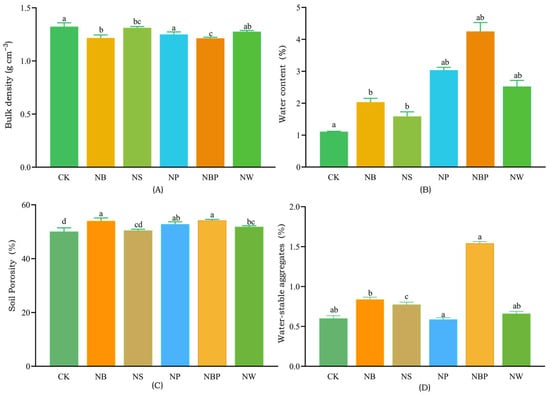
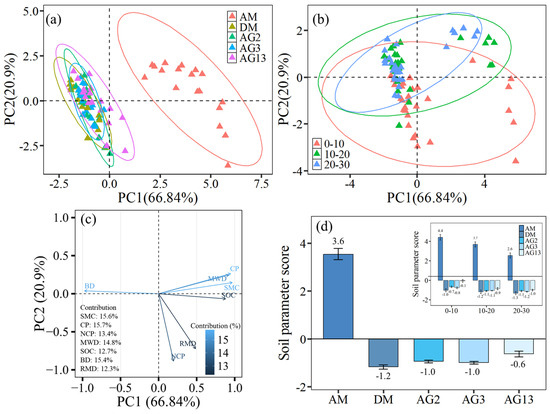
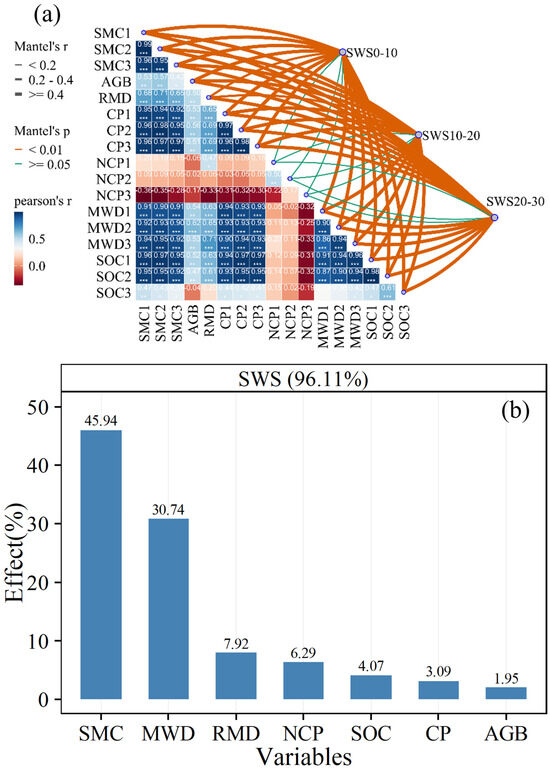
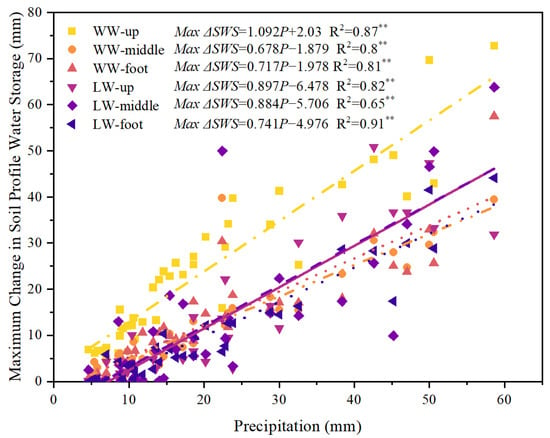
To clarify the effects and mechanisms of the solution formed by mixing flaxseed meal powder with water on soil water movement in sandy land, this study conducted laboratory simulation experiments using three extraction forms of flaxseed meal solution (supernatant, suspension, and precipitate) and five application rates (5 kg·m−2, 8 kg·m−2, 11 kg·m−2, 14 kg·m−2, and 17 kg·m−2), with untreated aeolian sandy soil set as the control (CK). The results showed that: (1) Flaxseed meal can significantly reduce the soil water infiltration rate, with the sediment treatment group exhibiting the optimal effect. After the application of the three flaxseed meal treatments, soil infiltration indices decreased significantly, and the magnitude of the reduction became more pronounced with the increase in flaxseed meal application rate. (2) Flaxseed meal exhibited a significant effect on water retention and evaporation inhibition; after continuous evaporation for 35 days following the spraying of different flaxseed meal treatments, the cumulative evaporation of CK was significantly higher than that of the other treatments. Compared with CK, the cumulative evaporation of the groups treated with the supernatant, suspension, and precipitate of flaxseed meal solution decreased by 11.69%, 24.13%, and 43.22%, respectively. The sediment group achieved the optimal effect, and the evaporation inhibition effect was enhanced with the increase in application rate. (3) All three flaxseed meal mixture treatments increased soil bulk density and decreased soil total porosity, and saturated water-holding capacity and minimum water-holding capacity, with the sediment treatment exerting the most significant effect. The efficacy of all treatments became more notable as the application rate increased. There was a highly significant correlation between soil physical properties and water movement rate. Flaxseed meal affects soil water movement by altering soil physical properties. In conclusion, spraying flaxseed meal on the surface of sandy soil can effectively reduce infiltration and inhibit evaporation, with the sediment treatment group achieving the optimal improvement effect. The soil crust formed by flaxseed meal has a strong water-binding capacity, which can maintain water supply for plant growth over a long period, making it highly suitable for popularization and application in sandy farmland.
8 February 2026

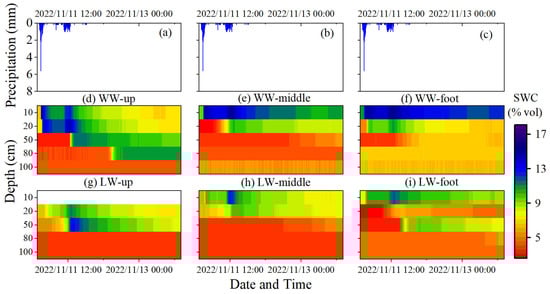
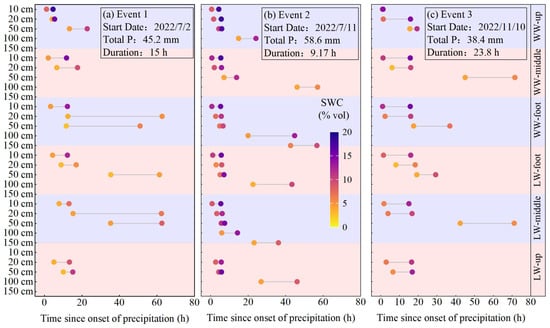
Photo of flaxseed meal aqueous solution.

News & Conferences

Issues

Open for Submission

Editor's Choice

Reprints of Collections

Pests, Pesticides, Pollinators and Sustainable Farming
Reprint

Pests, Pesticides, Pollinators and Sustainable Farming

Editors: Antonios E. Tsagkarakis, Georgios Papadoulis, Argyro Kalaitzaki
Plant Invasion
Reprint

Plant Invasion

Editors: Bruce Osborne, Panayiotis G. Dimitrakopoulos

Get Alerted

Add your email address to receive forthcoming issues of this journal.

XFacebookLinkedIn
Agronomy - ISSN 2073-4395